
Metropolitan AME Zion Church
Metropolitan African Methodist Episcopal Zion Church and Its Mission:
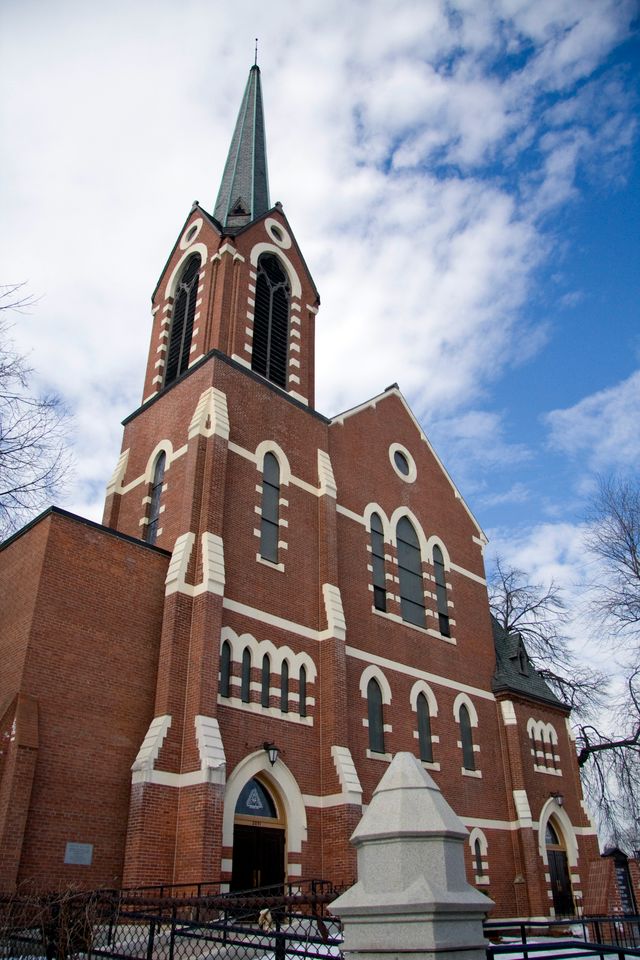
The Metropolitan African Methodist Episcopal Zion Church—originally known as the North Methodist Episcopal Church—is one of Hartford’s oldest African American congregations, founded in 1833. Since 1926, it has occupied a striking High Victorian Gothic building at 2051 Main Street in Hartford, Connecticut.
For nearly two centuries, the church has served as a spiritual, cultural, and civic anchor for the city’s African American community. In 1994, the building was listed on the National Register of Historic Places, recognizing its significance as both a place of worship and a monument to African American resilience and faith in Hartford.
Hartford’s Black Religious Heritage and Architectural Legacy
The church sits in Hartford’s north side, the Clay-Arsenal neighborhood, occupying a visually dominant structure built between 1873–74. Originally constructed for a white Methodist Episcopal congregation, the building changed hands in 1919 when it was sold to a Jewish congregation. From 1926 onward, it became home to the Metropolitan AME Zion Church congregation.
This lineage of ownership illustrates the multicultural fabric of Hartford’s history, and the adaptive reuse of sacred spaces by marginalized communities seeking safe and permanent gathering spaces in the face of urban development, displacement, and shifting demographics.
Architecture and Significance
The church is a 3½-story brick structure featuring stone trim, pointed Gothic-arched windows, and elaborate stone beltcourses. The grand gabled façade includes dual entryways, with the left entrance set beneath a buttressed bell tower and steeple. The building’s size, symmetry, and ornamentation mark it as one of Hartford’s most architecturally prominent houses of worship.
The church’s first Black congregation building stood on Elm Street, but was removed during the creation of Bushnell Park. The congregation then moved to Pearl Street in a newly constructed sanctuary, which was later rebuilt in 1898 to accommodate its growing size. The current church building on Main Street has been its home for nearly 100 years, symbolizing both endurance and transformation.
This site is open to the public.